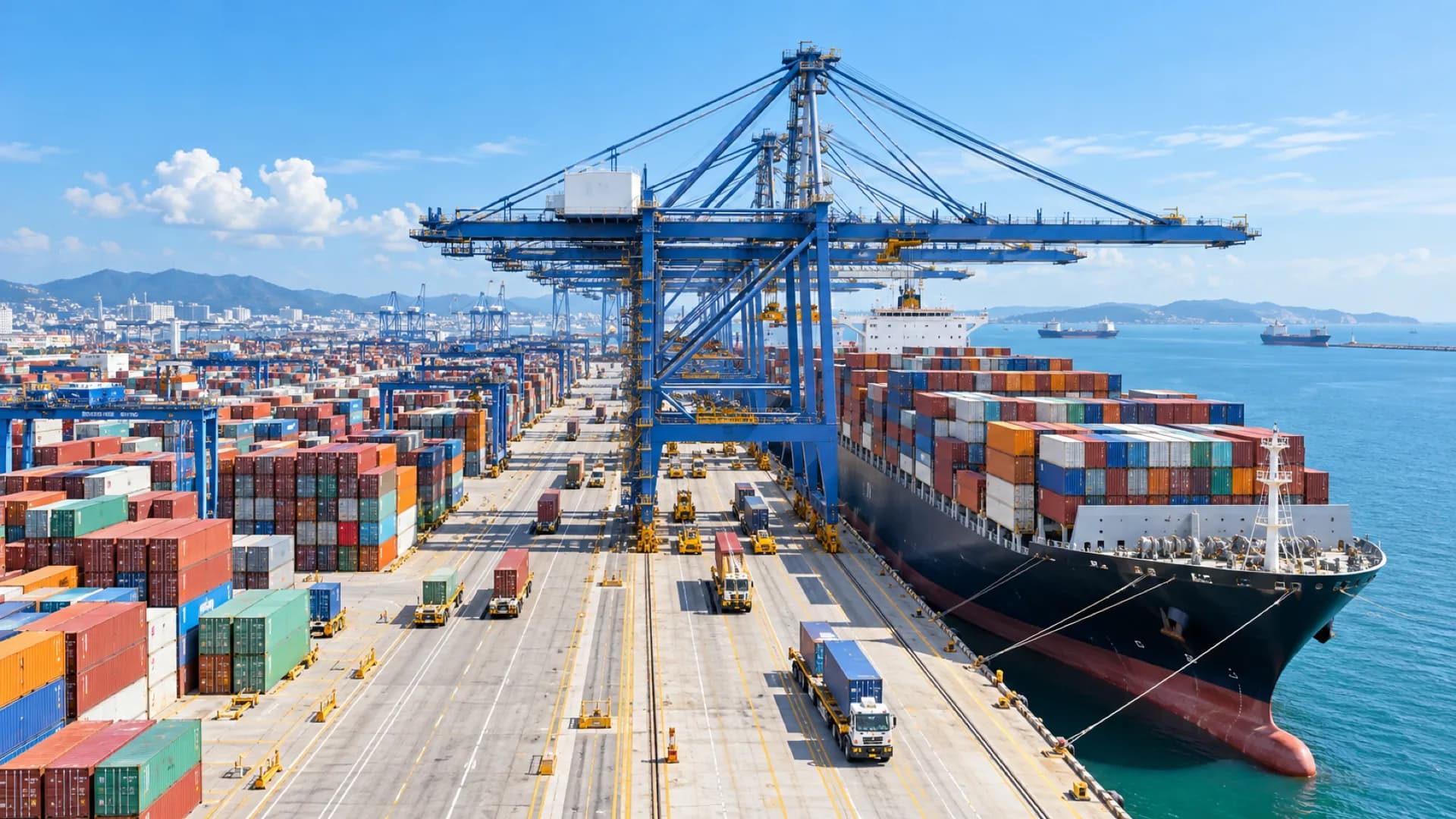

Mersin is one of Turkey's busiest container ports in the Eastern Mediterranean. A large amount of export cargo from Çukurova, south-eastern Turkey and Central Anatolia is loaded on vessels here.
On paper the process is simple, but the steps depend on each other. A delay at one step, such as an export declaration that closes late, can make the container miss its vessel and wait for the next sailing. Below is the order a typical container export follows.
Booking
The first step is to book space with a shipping line, either directly or through a freight forwarder. The booking needs the port of loading, port of discharge, container type and number, product description and approximate weight. The line sends back a booking number and a confirmation. The confirmation shows the vessel name, the voyage number and, most importantly, the cut-off times: the latest time the container can enter the port, and the deadlines for the VGM declaration and the B/L instructions. The rest of the process is planned backwards from these times.
Empty container pick-up and inspection
With the booking, the line issues a release showing which depot the empty container is collected from. The truck takes this release to the depot and picks up the container. For food cargo, look inside the container when you collect it: it should be clean, dry and odour-free, with no nails, holes or residue from the previous cargo on the floor. If light comes in when the doors are shut, there is a hole. A container that is not suitable is swapped at the depot. Doing this check before loading is far cheaper than finding damp or tainted cargo at destination.
Loading, sealing and VGM
The container is hauled to the plant or a loading warehouse and loaded. Sacks or big-bags are stacked neatly, and gaps are filled so the cargo does not shift in transit. Because temperature changes at sea can cause condensation inside the container, desiccant bags and paper lining on the walls are often used for pulse cargo. When loading is finished, the doors are closed and the seal provided by the line is fitted; the seal number goes on the packing list and the bill of lading. The verified gross mass (VGM) is established by weighing or by the calculation method and declared to the line before the cut-off.
Export declaration
The export declaration is filed electronically by a licensed customs broker. It carries the invoice details, HS code, weights and container details. For pulses, the phytosanitary inspection should be completed before this stage. The customs system routes each declaration to a control channel based on risk assessment: some are approved straight away, some go to a document check and some to a physical inspection. Opening and inspecting a container takes time, so the declaration should not be left until the last day. FM Port plans this step on your behalf and follows it against the cut-off time.
Gate-in and vessel loading
The loaded container is taken in through the port gate before the cut-off; this step is called gate-in. At the gate, the container number, the seal and the outside condition of the box are checked, and the container then waits in the terminal for its vessel. A container whose export declaration has not closed, or whose VGM has not been declared, will not be loaded. When the vessel berths, containers are loaded according to the stowage plan. In busy periods lines may roll some bookings to the next vessel. So it is worth confirming with the line that the container was actually loaded and that the vessel has sailed.
Bill of lading and document delivery
Once the container is on board, the line issues the bill of lading. A draft comes first, and the shipper needs to compare the consignee name, product description, weight, and container and seal numbers on it against the invoice before approving. Corrections can be made later, but they cost money and take time. The B/L can be printed as an original, released by telex release or issued as a seaway bill. Which one is used depends on the payment terms: under a letter of credit or cash against documents, the original B/L reaches the buyer through the banks, and the buyer can only take delivery of the goods with it.