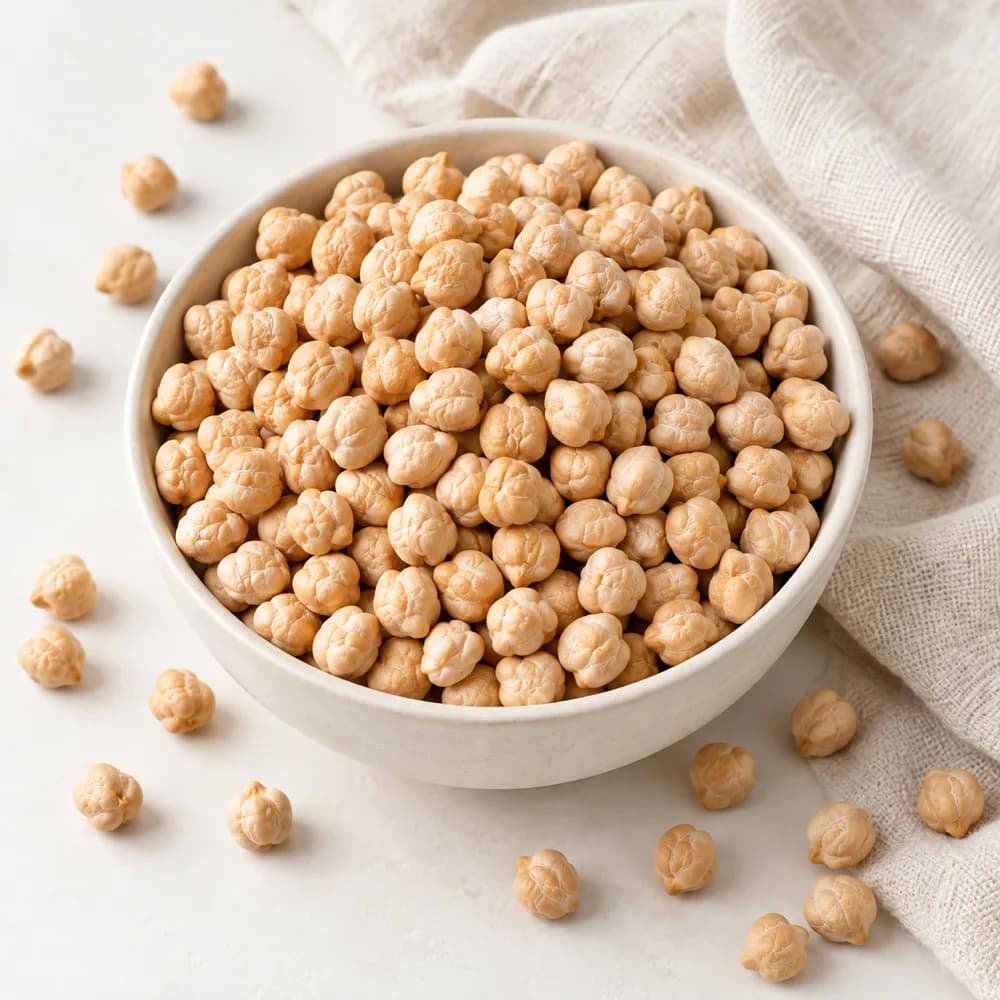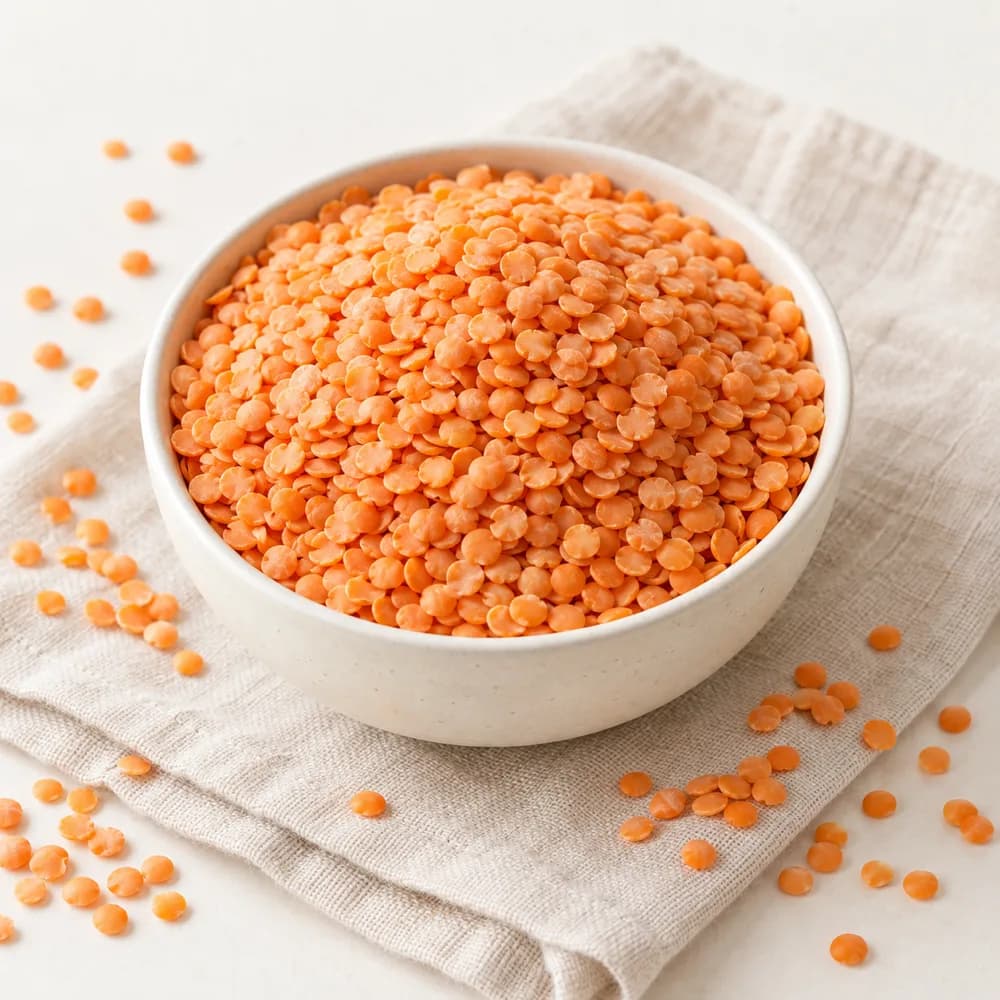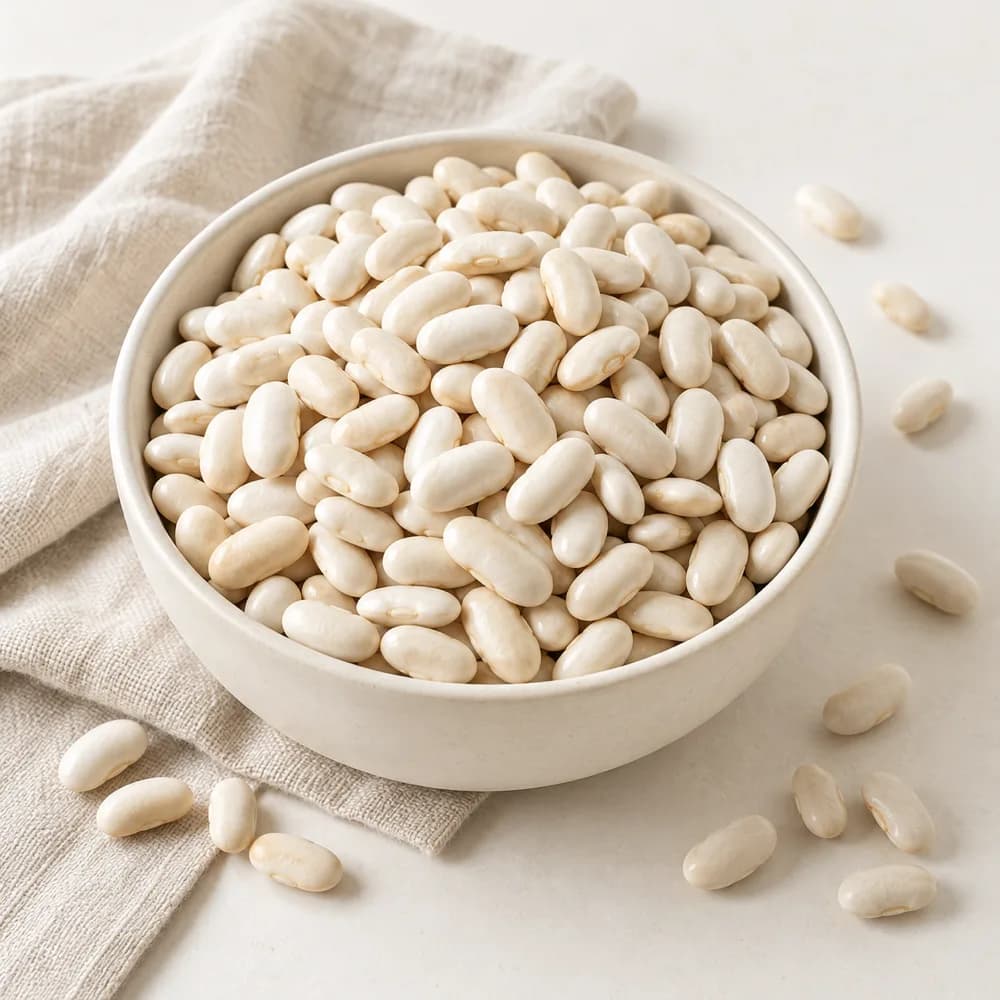


Pulses are a dry product and, under the right conditions, keep their quality for months, often for more than a year. When problems do appear, they almost always start in the same place: moisture. Once moisture rises, mould, heating and insects tend to arrive together. Most of the work in a pulse store is about keeping moisture under control.
This guide collects the basic rules a wholesaler or food manufacturer can apply in their own warehouse. Whether the product is chickpeas, lentils or beans, the rules are largely the same.
Grain moisture and air humidity
The moisture of the product coming in matters more than the condition of the store. For chickpeas, lentils and beans, safe storage generally calls for grain moisture below about 13-14%, with some variation by product and climate. A lot that arrives damp will start to deteriorate even in a good store. On the air side, relative humidity that stays high lets the product pick up moisture from the air. A closed store that keeps the rain out and has a dry floor is a must. Having moisture measured on receipt and keeping the result on file gives you the strongest evidence you will have if a dispute comes up later.
Temperature and ventilation
As temperature rises, insects breed faster and the grain itself respires more. A cool store keeps the same product in good condition for much longer. Space under a roof that heats up in summer, or along a wall in direct sun, is a poor place for pulses. Ventilation removes warm, humid air from the store. But if the outside air is more humid than the air inside, opening the windows does harm rather than good, so ventilate during the hours when the outside air is cool and dry. Where day and night temperatures differ widely, condensation can form on the surface of sacks. That is often the first sign of mould.
Pest control
The main pests of stored pulses are seed beetles; the bean weevil, the cowpea weevil and the lentil seed beetle are the best known. Some of them lay their eggs in the grain while it is still in the field, and the adults emerge later in storage. So a lot that looks clean can still carry a risk. Regular inspection, a clean store and prompt removal of old residues are the first line of defence. Traps and closed doors and windows keep rodents out. If fumigation is needed, it should be done only by licensed operators following the rules. Pulses should never share a store with chemicals, fertiliser or strong-smelling goods, because they pick up odours easily.
Pallets, stacking and FIFO
Sacks and big-bags never go straight onto the floor. They are stacked on pallets with a gap left to the walls, which lets air move and leaves room to walk between the stacks for inspection. Each lot is marked on the stack with its arrival date, origin and lot number. Stock goes out first in, first out (FIFO). It sounds obvious, but in busy periods the pallet nearest the door gets loaded and the older lot at the back sits for months. Planning the stacks around FIFO from the start, so that older stock is always within reach, solves this.
Sacks or big-bags
The most common packaging for wholesale pulses is the 25 or 50 kg woven polypropylene sack. Sacks can be handled by hand, suit distribution in smaller quantities and stack flexibly in the store. A big-bag usually holds around one tonne, is moved by forklift and cuts filling and emptying labour considerably. For a buyer with a packing or processing line, big-bags make more sense. On the other hand, a big-bag is one single mass: if moisture or insects get in, the amount affected is large and you cannot check it sack by sack. The right choice depends on where and how the product will be used, and you can simply state your preference when asking MMS Agro for a quote.