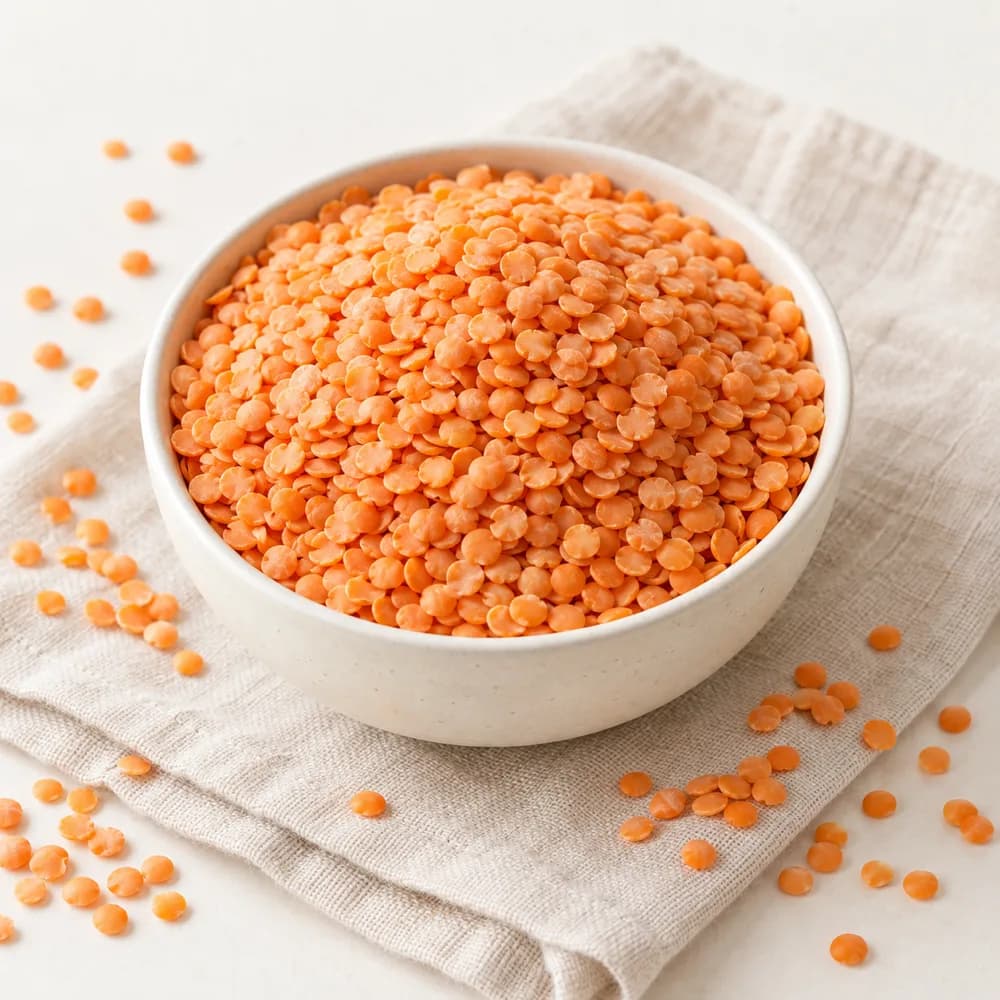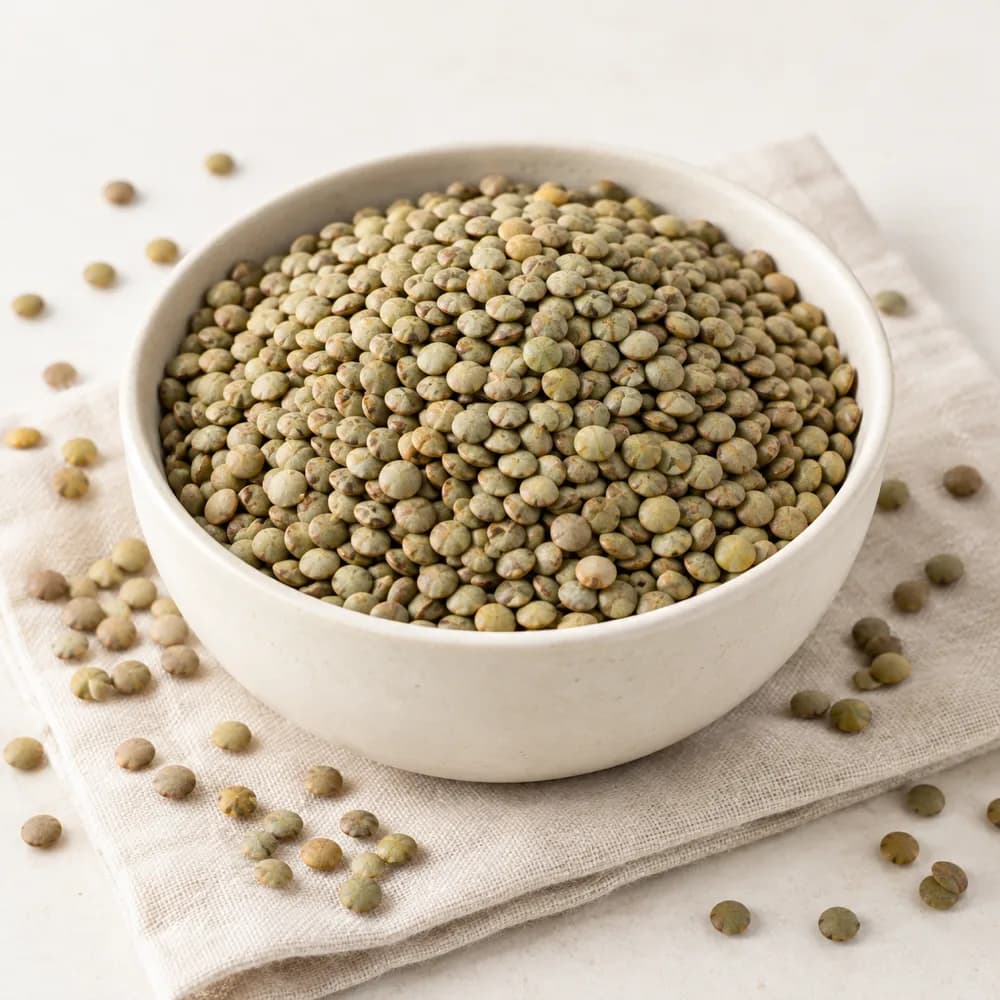

Lentils come off the field with their seed coat on. On a red lentil that coat is brown or greenish brown, and the orange-red colour only shows once it is removed. The orange lentil on a supermarket shelf has already been processed.
At the plant the lentils are cleaned, stones and foreign matter are taken out, and then the coat is removed. The dehulled grain is either left whole or split into two halves. Which way it goes depends on what the buyer will do with it. Two products from the same raw material can differ quite a bit in price, cooking time and end use.
Below we go through the three forms, where each one is used, and what to put in the specification when you order.
Whole red lentils with the coat on
This is the grain as harvested, with the seed coat still on and no dehulling done. It is brown or greenish brown on the outside. In trade it mostly changes hands as raw material: processors with dehulling lines buy it and turn it into football or split lentils in their own plants. Some South Asian kitchens cook it whole, but it takes longer and the texture is firmer. When buying, check grain size, the share of broken and shrivelled grains, foreign matter and moisture. These values decide how much finished product you will get out of it once it is dehulled.
Football: dehulled whole grain
Football lentils have had the coat removed but have not been split. The name comes from their round, ball-like shape. They take a little longer to cook than split lentils and hold their shape better once cooked, so they are chosen for salads, pilafs and dishes where the grains should stay separate. They also look good in a retail pack, and some markets ask for them specifically. Producing them is more delicate: some grains break during dehulling anyway, so a lot with a high share of whole grains needs extra sorting. That is usually where the price difference comes from.
Split red lentils
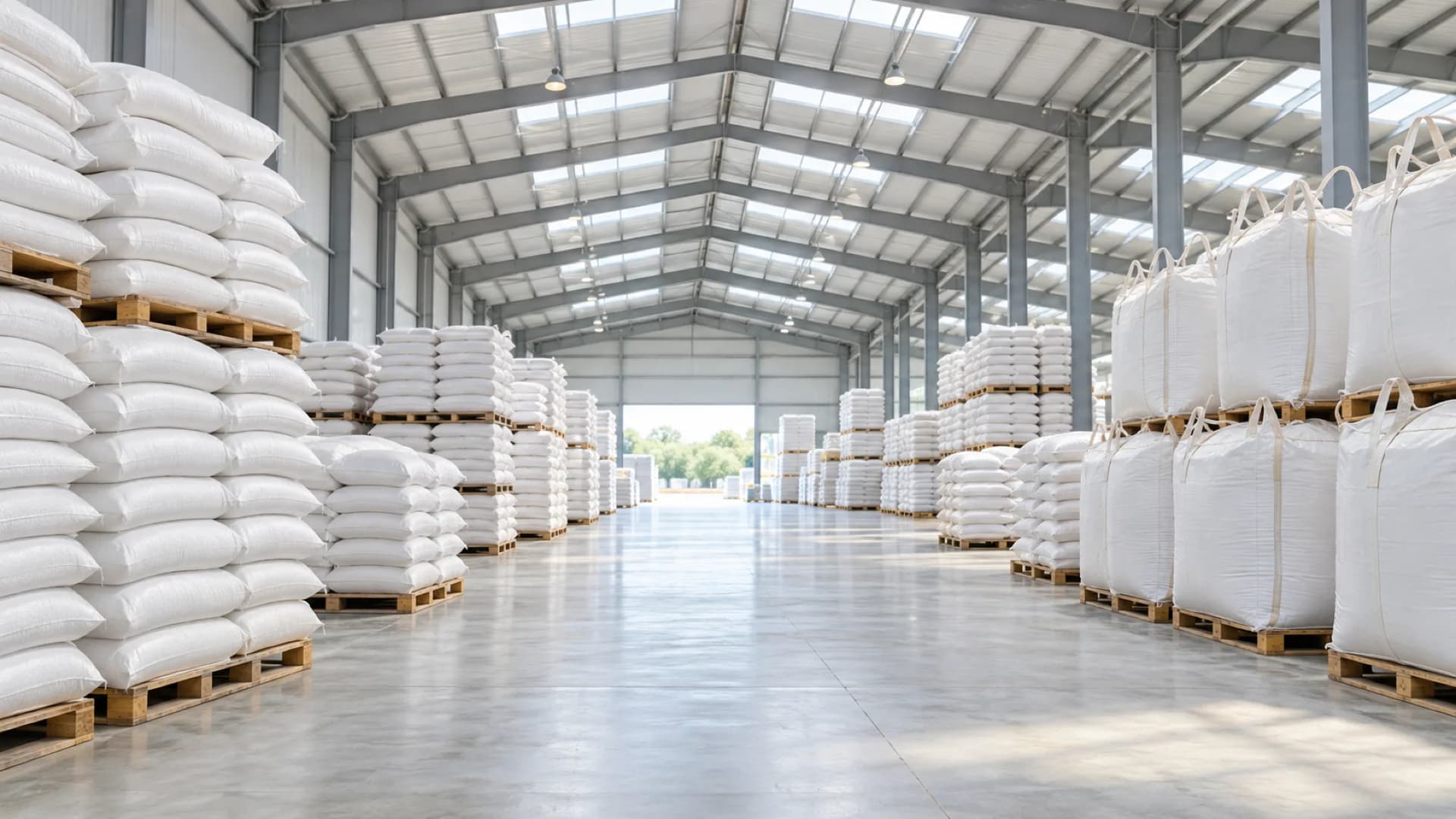
Split lentils are dehulled and separated into two halves, and by volume this is the form that sells most. They cook quickly, break down as they cook and thicken the dish, which is why Turkish lentil soup is almost always made with split lentils. Retail packs usually range from 500 g to 5 kg, and wholesale goes in 25 or 50 kg sacks. Split lentils have grades of their own: halves can be separated from smaller broken pieces, often called chips. The more chips a lot contains, the more it moves towards industrial use. Retail packers ask for lots with few chips.
Use in the food industry
Industrial buyers usually treat lentils as an ingredient. Makers of instant soups and soup mixes buy split lentils either as they are or milled. Lentil flour goes into gluten-free products, baby food, snacks and extruded products as a source of protein. Canning and ready-meal producers look for lentils whose cooking time is consistent and does not change from one lot to the next. An industrial buyer watches colour uniformity, moisture, foreign matter and microbiological values more closely than a retail buyer does, and usually asks for an analysis report with every shipment.
What to put in the specification
Two lentils sold under the same name can differ a lot in quality. When you ask for a quote, state in writing the form (whole, football or split), the grain size or calibre, the maximum moisture, and the tolerance for foreign matter and grains that still have their coat. If you have expectations on colour, agreeing on a sample is the safest route. Some markets want polished product and some do not, so mention that at the start as well. Packaging type and label language also affect the price. If you share these details when asking MMS Agro for a quote, the price and lead time you get back will be more accurate.